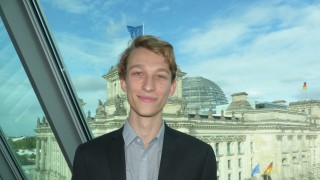
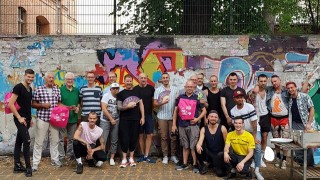
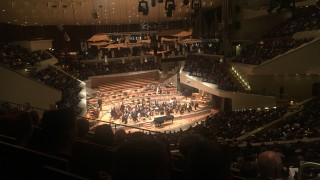
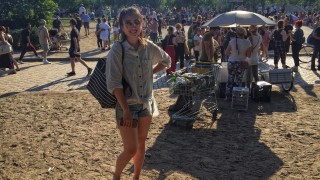
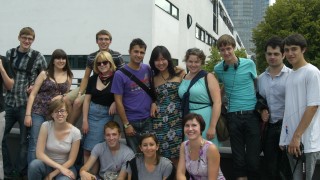
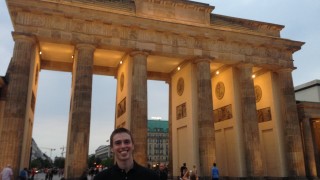
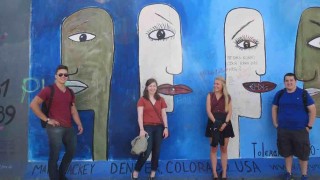
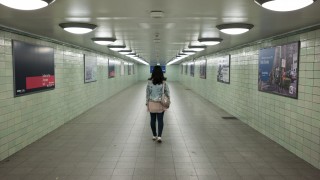
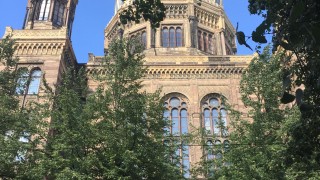
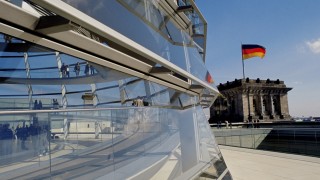
Spend a semester, or better yet, a full academic year studying at Berlin's top university in the EU’s economic and political powerhouse. Explore your academic interests through this fully customizable program by choosing from a broad range of German language, BCGS, and/or local university courses. Discover contemporary German life and culture in a dynamic, multicultural city with a vibrant arts scene. Learn from Berlin's advanced knowledge of environmentalism and new technologies. And immerse yourself daily in the city’s remarkable history!
The BCGS was established in 1995 and is proud to have run programs for over 30 years. The BCGS is based at the Freie Universität Berlin, where over 995 alumni of the different programs have studied. They not only deepened their language proficiency and academic knowledge, but also gained a variety of personal and cultural experiences, which they took back home with them. Some alumni even return to live, study, or work in Germany. This is a once-in-a-lifetime opportunity to live and study while immersed in the dynamic city of Berlin.
BCGS Programs
The BCGS offers three programs with different calendar options for you to consider. If you can follow the German calendar, you will have a broader range of courses from which to choose, as you will be able to select from courses at the Freie Universität (FU) Berlin, a premier German university that offers courses which will not only pique your intellectual curiosity, but also help to meet your home school requirements.
BCGS Original Fall, Spring or Academic Year
These options follow the German calendar and offer the opportunity to take courses at the FU. Apply on this page.
- The Academic Year runs from September through July. If you enroll in the academic year program, there are even more opportunities for both language and cultural immersion. It especially opens up the door for the ability to participate in an internship with local companies and organizations.
- The Fall program runs from September to the end of February and works well for US students from quarter schools.
- The Spring runs from March through July and works well for all US students.
Fall Term Program (FTP)
The Fall Term Program follows the US Term calendar and runs from September to December. Students take the BCGS Visiting Professor course (taught by a faculty member from one of the BCGS member institutions) and choose from FU-taught Block Seminars. Find more info on the Fall Term Program website.
BCGS English Language Program (ELP)
If you are a German Language beginner or have completed fewer than 4 semesters of German, please review the BCGS English Language Program to learn more about your options.
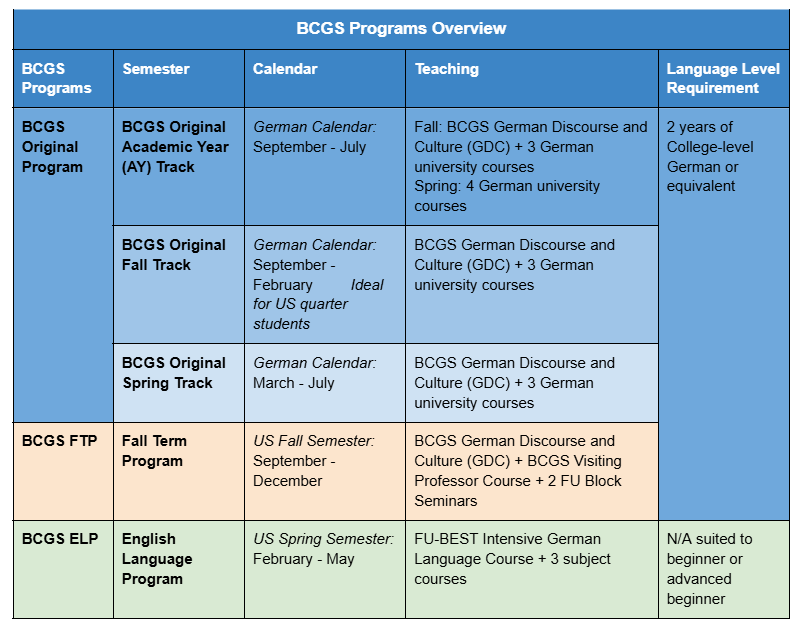
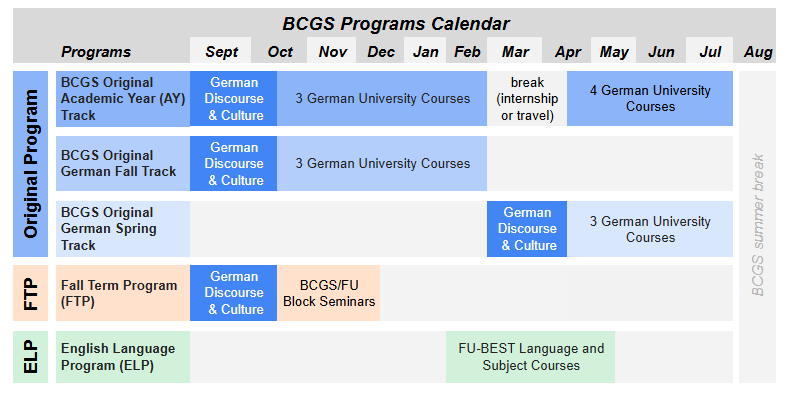
BCGS Program Graphics: Overview and Calendar
More information about the BCGS programs are available as follows in the BCGS Programs Overview and Calendar graphics.
Programs
Calendar
BCGS Original Program Overview
The BCGS Original Program is based on the German academic schedule and has three tracks:
Academic Year - September to July
Fall Term (Wintersemester) - September to February
Spring Term (Sommersemester) - March to July
The BCGS Original Program is designed to support you as you adjust to your new life in Berlin. For the first six weeks, you take the signature German Discourse and Culture (GDC) course to help you prepare academically and linguistically for your studies. The GDC course also introduces you to Berlin through weekly cultural activities that take you out and about in the city. Once you complete the GDC, the BCGS Original Program gives students the unique opportunity to study at Berlin's top university, Freie Universität Berlin across a wide range of disciplines taught in German and in some fields also in English. In German Studies, there are also courses for international students taught on a B1 intermediate German language level.
A highlight of the program is the unique opportunity to engage with the local community. Past students have participated in volunteer opportunities, student organizations at the FU, local choirs/orchestras, and club sports. If you enroll in the academic year track, there are even more opportunities for both language and cultural immersion. It especially opens up the door for the ability to participate in an internship with local companies and organizations.
The Consortium
The Berlin Consortium for German Studies (BCGS) was founded in 1995 by a group of U.S. universities in partnership with the Freie Universität Berlin (FU). In Spring 1996, the BCGS sent its first student group to study in Berlin. The BCGS provides a framework that supports and helps students, as needed, to live in Berlin and to navigate the German university system. The BCGS also facilitates the annual exchange of FU students who spend the year studying at one of the member institutions. Members of the Consortium are:
- University of Chicago
- Columbia University and Barnard College
- Cornell University
- The Johns Hopkins University
- University of Pennsylvania
- Princeton University
- in association with the University of Notre Dame and Vassar College
The BCGS welcomes qualified students from other institutions to apply and regularly has visiting students as part of the program each term.
Eligibility & Application
Must be currently enrolled as an undergraduate student in good academic and disciplinary standing
Must have completed at least two years of college-level German or the equivalent.
Minimum 3.0 average language GPA
Minimum 3.0 cumulative GPA. Students must also maintain a 3.0 GPA during the semester before going abroad.
Students from universities and colleges outside of the BCGS Consortium School are welcome to apply
HOW TO APPLY
Want to apply? Click the “Start Your Application” button at the top of this page. If the button doesn't appear above, the program is not yet accepting applications. You will be asked to set up a short profile, which will allow us to send you relevant information about your application. Once you’ve created a profile, you will see a checklist of items that you will need to submit. These generally include:
Application questionnaire(s)
Letter(s) of recommendation - language and academics
Official Transcript
Diagnostic Language Evaluation and meetings with director of language program at your school or with Columbia's language representative for visiting students
Home school approval/clearance: please check with your home university's study abroad office about applying for permission to attend the program and to transfer the credit
Application fee (if applicable)
Academics
You will begin the program in an intensive German language course called German Discourse and Culture (GDC) for 6 points.
All BCGS Program students enroll in the signature German Discourse and Culture (GDC) course, which takes place during the first six weeks of the program. The GDC helps to prepare students to take university courses in Berlin and includes activities and excursions.
Students enroll in the following courses for a total of 15-18 Columbia University points (equivalent to a full load at your home institution):
German Discourse and Culture (6 points)
3 Electives (9-12 points) (Note: If you stay for the academic year, you will enroll in 4 electives for 14 to 16 points in the second semester.) Electives include:
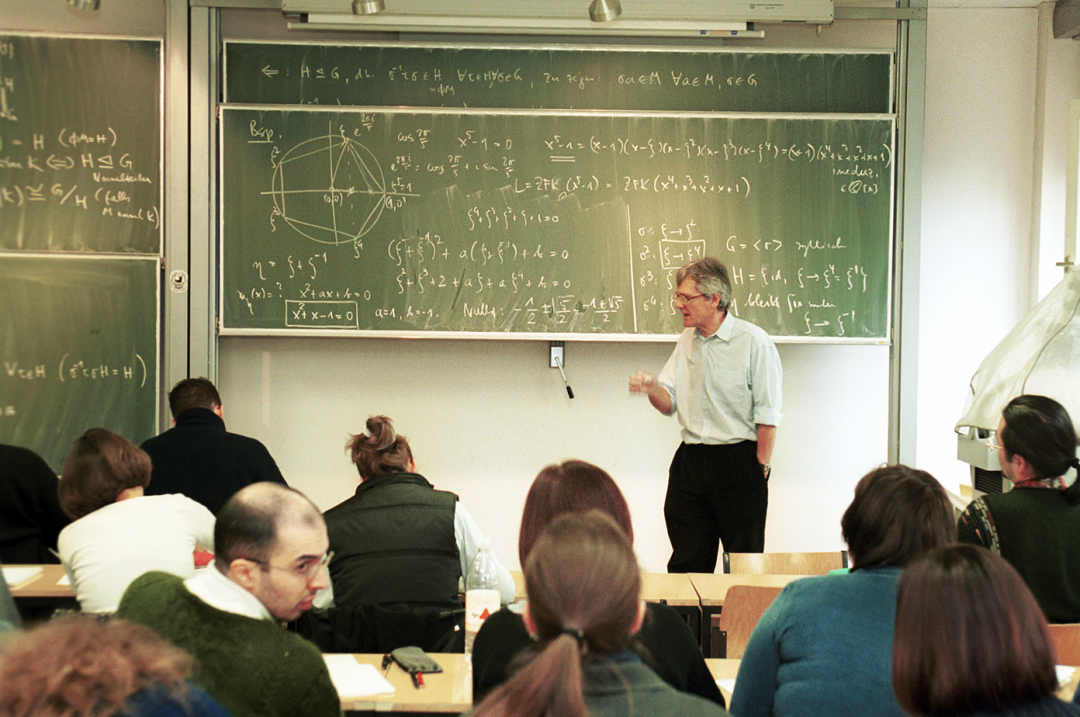
University courses encompassing most undergraduate disciplines including STEM courses, taught primarily in German
University courses taught in German on an intermediate level for international students
Students have the option to enroll in the BCGS Visiting Professor Course in the Fall semester
The program provides significant support for students, including BCGS Staff, GDC Faculty and BCGS writing consultants (see full description under people), who are advanced students who provide extra support to help you adapt to the German University system.
As you will see below, the program has a great deal of flexibility. For students at a more advanced German level, there is the option of full immersion with all classes being taught in German taken alongside German students. For students at lower German levels, there are options for partial immersion (i.e. classes taught in English or classes designed for international students).
For examples of how the BCGS customizes curricula for the students, please click here.
The University reserves the right to withdraw or modify the courses of instruction or to change the instructors as may become necessary.
German Discourse & Culture
German 3335 OC, 3405 OC, and 4335 OC: German Discourse and Culture, 6 points
Instructor: Dr. Detlef Otto, BCGS Language Director, and team
This six-week course is required of all incoming fall and spring students and is taken during the orientation period prior to the start of the German semester. There are two course levels offered each semester in which students are placed depending on their language abilities.
This course combines extensive language study with an introduction to the discourse of German academic culture, both spoken and written. The goal of the course is to prepare students for successful study in the German university system. Special attention is paid to practical vocabulary for both academic and daily living applications.
At the conclusion of this course, all students will take a language placement exam. Satisfactory completion of this course as well as reaching the German level B2.2 (CEFR) on the language exam are required as a condition of enrollment in courses taught in German at the FU.
CURRICULUM:
Each week, the course focuses on a few specific topics relevant to life and study in Berlin and also takes individual interests of students into account. The professors use current newspapers, blogs, podcasts, and relevant videos to support the study of the topics. Past topics have included:
Berlin: its city districts, neighborhoods, and inhabitants; current urban debates, including gentrification
Modern German History and how Germans deal with their past
Germany’s political institutions
Germany’s education system
Germany’s economy and its challenges of sustainability, digitalization, energy security, and impact of AI
Socio-political issues such as migration, the New Right, Jews in Germany today
The Humanities: Art & Theater in Berlin
Exploring German cultural heritage outside of Berlin
ACTIVITIES:
Once a week, the GDC courses of both language levels leave the classroom together for a cultural activity in and around the city of Berlin. Each excursion is organized in association with the course and the week's topic(s) of study. Examples of past activities include:
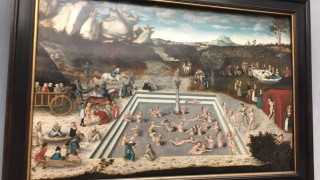
Guided tours through Berlin districts such as Kreuzberg, Mitte, and Prenzlauer Berg and museums such as Berlinische Galerie, Gemäldegalerie, Hamburger Bahnhof, Deutsches Historisches Museum, Jüdisches Museum, Martin Gropius Bau, Alte Nationalgalerie, Altes Museum, Bode Museum, and Neue Nationalgalerie
Performances at Deutsche Staatsoper Berlin, Deutsche Oper Berlin, Komische Oper as well as at theatres and off-theatres such as Maxim-Gorki-Theater, Berliner Ensemble, Volksbühne Berlin, and Heimathafen Neukölln
Guided tours or plenary sessions at Berlin and federal institutions such as Deutscher Bundestag Bundeskanzleramt, Bundesrat, Abgeordnetenhaus Berlin
Day trips to Bauhaus Dessau, Lutherstadt Wittenberg, Neuruppin, Potsdam
ADDITIONAL GERMAN LANGUAGE COURSE:
Students who do not reach the level B2.2 (CEFR) on the language exam at the end of the GDC course are required to take an additional German language course at the FU. Check with your home institution about whether you will receive credit for this course.
The University reserves the right to withdraw or modify the courses of instruction or to change the instructors as may become necessary.
BCGS Visiting professor course
Fall 2026
Instructor: Professor Paul Fleming from Cornell University
Berliner Topografien: Miniaturen, Romane, Filme
This course explores the city Berlin as depicted in urban miniatures, film, literature, and the feuilleton from its advent as a modern metropolis around 1900 up to the present. It is particularly interested in the use of identifiable locations – streets, plazas, buildings – as ways of both orienting the reader and viewer and offering them insight into Berlin at different moments in time. Places are explicitly depicted as sites, receptables of history. Students will be exposed to a wide array of writing and visual styles and encouraged to explore their own, as they ‘work their way through Berlin’ both on the page and as visitors living in the city. Students will be encouraged to visit the sites and consider (and describe) how much has changed over the past 125 years. Two central foci will be the Weimar Republik, especially the role of class and gender as the intersect with work, and the divided city, viewed both seriously and with some humor. The course is bookended by an opening series of literary ‘snapshots’ depicting Berlin in the early 20th century and the early 21st century.
The University reserves the right to withdraw or modify the courses of instruction or to change the instructors as may become necessary.
Electives
Depending on your language level, you will select your remaining courses from the options below. At the end of the German Discourse and Culture Course, BCGS staff assist you in finding appropriate courses for your language level and academic interests. This allows for the course customization for all BCGS students.
The following are the types of courses available at the FU that you will decide between:
Courses taught in German, fully integrated with FU students (4 points each)
Courses taught in English, fully integrated with FU students (4 points each)
Courses for international students taught in German for non-native speakers (3 points each)
Freie Universität Courses
Berlin's top university, Freie Universität Berlin is a leading research institution and was established in 1948 under its founding motto, "Truth, Justice, Freedom."
Freie Universität is a full-spectrum university, comprising twelve academic departments and four central institutes that together offer more than 150 different degree programs in a broad range of disciplines in the humanities, social sciences, and natural sciences. The university offers programs toward any academic degree, from bachelor’s and master’s degrees to state exams, doctorates, and habilitation. The university’s extensive professional and continuing education offerings, ranging from individual classes to continuing education master’s degree programs, supplement the academic options available to prospective students.
The broad range of degree programs and disciplines offered at Freie Universität allows students to tailor their studies to their individual interests. Primarily located in Berlin-Dahlem, the campus includes offices and classrooms housed in villas, some large lecture halls, parks, and wooded areas. In addition to many research institutes, the FU Berlin also has a large library system, computer facilities, a center for recreational sports, and a wide array of student organizations. Like most European universities, it is not a residential university, and its student body commutes to the campus from all over greater Berlin.
Subject Areas at the FU
To browse the course catalog at the FU, click here. Freie Universität Berlin offers undergraduate programs in a wide variety of subjects, e.g.
- African Art History
- Ancient Near Eastern Languages and History
- Archaeology of the Ancient Near East
- Art History - Africa / East Asia / Europe and America
- Biochemistry
- Bioinformatics
- Biology
- Business Administration
- Byzantine Studies
- Catalan
- Chemistry
- Chinese / Chinese Studies / East Asian Studies / Chinese language and society
- Classical Archaeology
- Comparative Literature
- Computer Science
- Digital Media and Technology
- Economics
- Educational Science
- Egyptian Archaeology
- Egyptian Philology
- Egyptology
- English Language and Literature
- Film Studies
- French / French Language / French Studies
- Galician Language and Literature
- Geographical Sciences
- Geological Sciences
- German Language and Literature
- German and French Literature and Cultural Studies
- Greek Language and Literature
- Greek Literature in Translation
- Hebrew
- History
- History and Cultures of the Middle East (Concentrations: Arabic Studies / Iranian Studies / Islamic Studies / Semitic Studies / Turkish Studies)
- Humanities in an Interdisciplinary Context (GiK)
- Italian / Italian Language and Literature / Italian Studies
- Japanese / Japanese Studies / East Asian Studies
- Jewish History / Jewish Studies
- Jewish Studies
- Korean / Korean Studies / East Asian Studies
- Language and Society
- Language – Literature – Culture: Dutch
- Languages of Classical Antiquity: Greek / Latin
- Latin American Studies
- Latin Language and Literature
- Management
- Mathematics
- Media and Communication Studies
- Medieval Latin Language and Literature
- Meteorology
- Modern Greek Language and Culture / Modern Greek Studies
- North American Studies
- Philosophy
- Physics
- Political Science
- Portuguese-Brazilian Studies (with or without prior knowledge of the language)
- Prehistoric Archaelogy
- Psychology
- Religious Studies
- Social and Cultural Anthropology
- Spanish (with and without prior knowledge of the language)
- Spanish Language and Literature with Latin American Studies
- Studies in Ancient Civilisations (Concentrations: Ancient Near Eastern Archaeology / Ancient Near Eastern Languages and History / Classical Archaeology / Egyptology / Prehistoric Archaeology)
- Theater Studies
STEM Courses
Each semester, a small number of BCGS students in high academic standing and with an advanced level of German successfully enroll in STEM courses at the FU. In order to best prepare to enroll in STEM courses, students are encouraged to discuss their study-abroad plans with their home faculties and find out how flexible they are with respect to the topics of the courses.
Please note that the FU publishes course offerings only a couple of months before the respective lecture period. A rough orientation of topics taught at the FU can be found in the course offerings of the respective previous semesters. Here you can also find names of the FU professors who offered these courses. If you are unclear about requirements and prerequisites, you may also reach out to individual FU professors directly via email.
There are no BCGS subject tutors, but FU group tutorials will accompany STEM lectures to help students pass exams. In addition, the BCGS writing consultants will help students in dealing with the technical vocabulary.
Below are lists of STEM Departments and course titles students from the BCGS have enrolled in and successfully completed from 2012-2022.
Departments:
Chemistry
Computer Applications
Computer Science
Earth Sciences
Economics
Economics & Management
Geosciences
Mathematics
Operations Research & Financial Engineering
Physics
Psychology
Course Titles:
Analytical Mechanics
Artificial Intelligence
Behavioral Public Economics
Biological Psychology II
Code Semantic
Complex Analysis (Course in English)
Computer Architecture
Database Systems (course in German / English)
Developmental Psychology
Distributed Systems
Economic Growth (Course in English)
Elec. Data Processing I
Environmental Economics
Experiential Neurolinguistic
Financial Crises & Monetary Systems
Game Theory
Government Economic Policy
Health Psychology
Human Geography II
International Trade & Policy (Course in English)
Investment & Finance
Labor Market Theory
Linear Algebra I
Markets/Competition/Consumers
Organic Chemistry Empiric Spectroscopy
Organic Chemistry I
Paleontology & Earth History
Practice of Clinical Psychology
Probability II
Research in Clinical Psychology
Rural Change (Course in English)
Semantics of Programing Languages
Social Psychology
Social Science Research Methods
Socialization & Learning
Stress and Health
Special Interests/Cross Registration
Cross Registration at other Berlin Institutions of Higher Education:
Depending on capacity, students with special interests may be able to enroll in courses at local institutions such as the Humboldt Universität zu Berlin, the Technische Universität Berlin, the Universität Potsdam, and the Kunsthochschule Berlin-Weissensee. Non-studio courses may be available at the Universität der Künste Berlin and the Hochschule für Musik "Hanns Eisler."
The University reserves the right to withdraw or modify the courses of instruction or to change the instructors as may become necessary.
Grades and Transcripts
Grading & Credit Policy
Click here for the Columbia Semester/Academic Year program grading policies.
For credit amounts for each course type, please click  here.
here.
Transcripts
All courses taken on the program are converted to an American grading scale and transmitted to students as follows:
Columbia students: Grades appear in VERGIL and your transcript as semester grades from courses taken at Columbia. For more information, please see the section on Academic Credit in Steps to Study Abroad.
Barnard students: Grades appear on eBear and your transcript as any semester grades from courses taken at Barnard. For more information, please see the section on Credit and Transcripts for Barnard Students on our Barnard student pages.
BCGS Consortium students: Grades are entered into Columbia's VERGIL system and you will need to request a transcript to obtain your final grades. Please see the section on Credit and Transcripts for Non-Columbia Students on the Non-Columbia student pages
Non-Columbia students: Grades are entered into Columbia's VERGIL system and you will need to request a transcript to obtain your final grades. Please see the section on Credit and Transcripts for Non-Columbia Students on the Non-Columbia student pages.
If you would like to request additional copies of your Columbia transcript, please see the Columbia Registrar’s instructions: https://registrar.columbia.edu/content/transcripts. There are no fees for additional transcripts.
IMPORTANT: Please note that the timing of receiving transcripts varies from the U.S. academic calendar. Given the different U.S. and German academic calendars, grades are usually not received from your FU professor(s) until late April if you studied in Berlin for the fall semester and late October for the spring semester. If you need to have grades posted earlier, please talk to your university professors about submitting grades to the BCGS office as early as possible.
Life in Berlin
Curious about the student experience? Be sure to read Student Stories on our website and check out additional student testimonials on GoOverseas.
HOUSING
Students opting for program housing will receive an email by FU Accommodation with housing details and the application process which needs to be completed within three days. This will take place prior to the start of the program, beginning of December for spring students and beginning of June for fall students. Please do not use the application link on the general website of FU Accommodation but the link provided in the respective email.
Please note: The Berlin housing market is tight, expensive, and full of scammers, e. g. leases for non-existent apartments and deposit fraud. For these reasons, the BCGS strongly recommends program housing for participants.
Student Apartments
Student apartments provide a single room with a private bathroom and kitchenette. They are, however, dependent on availability. If there is no apartment available, you are guaranteed a fallback option in one of the dorms. Details will be discussed during pre-departure meeting.
Dorms
Dormitory living (which includes the Studentendorf Schlachtensee/Student Village and the Studierendenwerk Berlin) is also available to BCGS students. Please see details below:
- The Studentendorf Schlachtensee (Student Village) or
- Studierendenwerk Berlin (Dormitory Goerzalle or Dormitory Halbauer Weg)
Independent Housing
We encourage students to stay in program housing. If you are interested in independent housing, please contact UGE staff who can advise you and provide you with an Independent Housing Petition. Students must confirm that their home school policy allows for opting out of program-recommended housing, and must get the petition approved by UGE/BCGS and their home university before proceeding with independent housing.
By arranging your own housing, you will be expected to:
Confirm that your home school policy allows you to opt out of program-recommended housing
Find safe housing in a suitable neighborhood for the correct duration and send documentation to program staff prior to the FU Accommodation application deadline
Negotiate and follow the terms of use and payment
Independently resolve any disputes or issues related to your housing situation
Provide the full contact information of your residence to the program staff
MEALS
Berlin is a great food destination. The high ethnic diversity of its citizens contributes to the vast variety of its restaurants and food offerings from all over the world. There is a strong movement towards organic and regional produce as well as vegetarian and vegan cuisine. Nevertheless, the infamous Döner and Currywurst still have their place among the new trends. You will have easy access to your favorite food at fresh food markets, supermarkets, street vendors and on campus. At the main campus at Freie Universität in Berlin-Dahlem, there are several cafés, cafeterias, and two dining halls, which also offer vegetarian and vegan food. The prices for students at all Berlin University dining halls are subsidized and thus very affordable. Please note that there is no dinner served on campus. In addition, there are a few private restaurants and cafés around campus. However, please be aware that there are no meals included and there is no meal plan for BCGS students.
ACTIVITIES
The program offers many activities that will help students engage with the cultural life of Berlin.
Internships
Academic year students who are motivated to apply their German in a professional setting and gain experience in a particular field can apply for an internship. The BCGS staff provides assistance in finding internships, but students must be proactive in pursuing and securing placement with their chosen organization. Past internships have included:
Deutsche Gesellschaft für Auswärtige Politik (DGAP) (foreign policy think tank)
Senatsverwaltung für Stadtentwicklung (Berlin government office for urban planning)
Komische Oper (Opera House)
Benjamin Franklin Krankenhaus (FU hospital)
Schwules Museum (Museum for LGBT history and culture)
Museum THE KENNEDYS
BerlKönig (ride-pooling service)
Start-Up Companies
Art galleries
Spring semester students who are interested in interning can consider interning during the months of January and February prior to the start of the program. However, to do so, the visa process would be separate from the BGCS visa process and you would have to arrange your own housing.
Please note that according to the German Federal Employment Agency (Bundesagentur für Arbeit), you have to meet the following requirements to receive a visa for internships:
The internship must be closely related to your field of studies (documented by home school)
You can provide evidence of at least 4 semesters in this field
Your internship company has applied for confirmation of your internship at the Federal Employment Agency
In order to research options for internships in Berlin, students are encouraged to use the resources of their home institutions career services office.
Volunteering
Instead of an internship, students in recent years have participated in volunteer work throughout Berlin. This is much easier for Spring semester students to participate in than in an internship. Opportunities have ranged from teaching to social, cultural and ecological projects. Students interested in socio-political issues have found ways through volunteer work to contribute to the German “welcome culture,” helping refugees integrate in German society.
The “Freiwilligenagenturen,” non-profit agencies, help to coordinate volunteer work in the Berlin districts. Examples of volunteer projects include organizing grass root activities, mentoring kids with learning disabilities, helping LGBTQ* organizations, integrating refugees, and supporting homeless people.
Trips & Excursions
The program organizes a series of excursions and cultural activities in and around Berlin, which are integrated into the academic program. These trips are intended to provide an insider's look into Berlin and Germany, and they often provide access to people and places students might not otherwise have.
Cultural Program and Field Trips
During the first six weeks of the program, a trip is organized on a weekly basis. Examples of past activities include:
Guided tours through Berlin districts such as Kreuzberg, Mitte, and Prenzlauer Berg and museums such as Berlinische Galerie, Gemäldegalerie, Hamburger Bahnhof, Deutsches Historisches Museum, Jüdisches Museum, Martin Gropius Bau, Alte Nationalgalerie, Altes Museum, Bode Museum, and Neue Nationalgalerie
Performances at Deutsche Staatsoper Berlin, Deutsche Oper Berlin, Komische Oper as well as at theatres and off-theatres such as Maxim-Gorki-Theater, Berliner Ensemble, Volksbühne Berlin, and Heimathafen Neukölln
Visits at Berlin and federal institutions such as Deutscher Bundestag, including a political discussion with a politician or administrative representative, attendance at a plenary session, and a tour of the dome and Bundeskanzleramt
Day trips to Dessau (Bauhaus), Neuruppin (Fontane, Schinkel), Potsdam (castles such as Sanssouci and Cecilienhof), and Lutherstadt Wittenberg
The Semester Study Trip
A one-day trip to another city in Germany will be organized for program participants. Examples from the past have been Hamburg, Leipzig, and Dresden.
Daily Living and Schedule
The German University system is very different from the US University system. Students can expect for their classes to meet just once a week for 1.5 hours at a time. During the first 6 weeks of the program, the German Discourse and Culture course meets 4 days a week from 9 am until 1:15 pm. In general, Wednesdays are reserved for cultural excursions. In the fall semester, there are usually only two levels of German since there are fewer students and in the spring semester, three levels are usually offered.
Part of the academic day will be spent commuting to the FU campus. Like most European universities, it is not a residential university, and its student body commutes to the campus from all over greater Berlin. You will likely commute 30-50 minutes to class.
Fitness and Wellness
There are countless possibilities to enjoy your free time in Berlin. The Freie Universität offers a vast variety of sports programs, health sports, dancing and more. Furthermore, there are some 2,500 sports clubs in Berlin offering more intensive training in virtually any field. If you are looking for a commercial gym, you could consider purchasing a membership with SuperFit or Urban Sports Club which may be cancelled monthly.
There are also continuing education centers, the so-called Volkshochschulen, and music schools to learn something new or improve your skills in languages, dance, Yoga, fine arts, drums, politics and cultures, cooking, etc. While keeping you mentally fit, all of these opportunities also open up Germany society, allowing you to get more immersed during your time in Berlin.
Past BCGS students have spent time learning how to sail once a week on the big lakes, travelled through Germany with their rugby team, “advance-lunged” into fencing lessons, moved up to second league with their soccer team, or sung in the Collegium Musicum, the joined universities’ choir for the Queen of England. The possibilities to stay fit both mentally and physically while you are in Berlin are endless!
LOCATION
Berlin
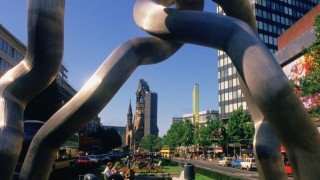
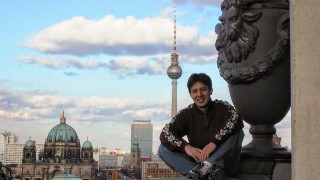
Berlin is the capital city and the largest city in Germany. The city has become known for its art scene and entrepreneurial environment. Berlin is home to world renowned Universities, museums, orchestras, and entertainment venues. This city, rich in history and historical monuments, will provide endless cultural outlets for city dwellers and visitors alike.
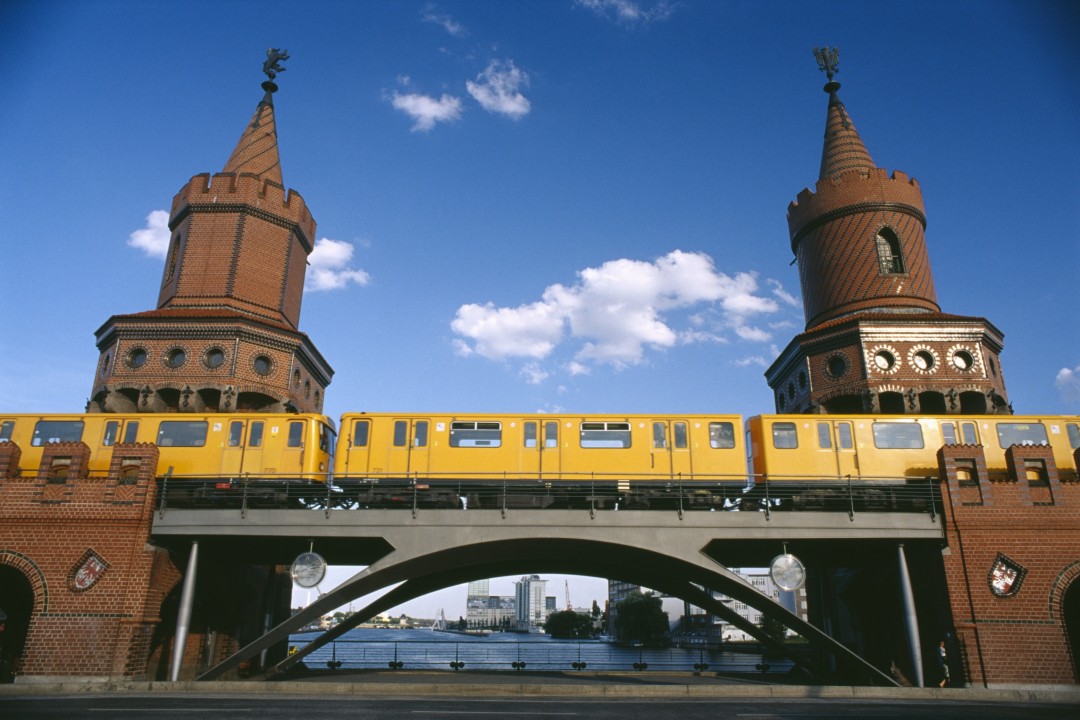
Since the city's reunification in 1990, Berlin has been characterized by change and invention. The dichotomy between old and new provides a constant reminder of Berlin's complex history. After the fall of the Berlin wall, Berlin emerged as the cultural and economic capital city of Germany, alive with a sense of transformation and progress. A vibrant nightlife, exciting art scene, and myriad cultural venues contribute to Berlin's status as one of Europe's most cosmopolitan and sophisticated urban centers.
Visits to museums, galleries, cultural and political institutions, and historic sites and landmarks all contribute to providing a deeper understanding of Germany's past and its current role in the European Union and global affairs.
Freie Universität Berlin
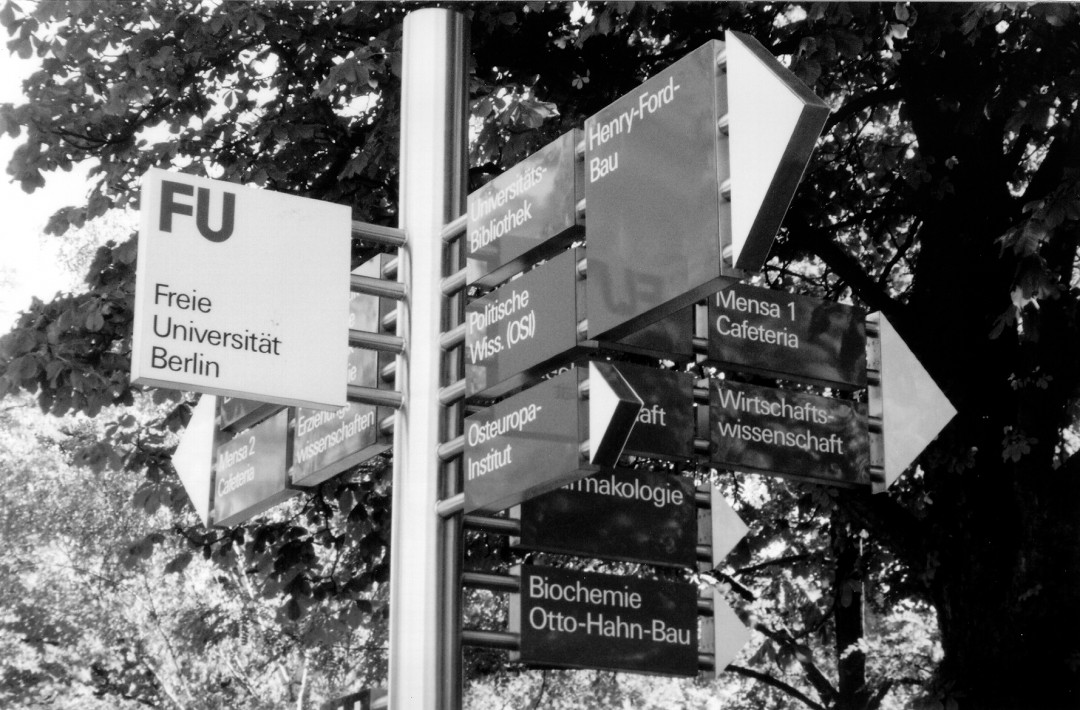
The BCGS facility is located on the main FU campus in Dahlem and functions as a home base for program participants. The program center houses administrative offices for the BCGS staff; classroom space where students convene for the Selected Topics courses; and limited computer facilities where students may check e-mail and W-LAN access for their own laptops via “Eduroam”.
Please let the Freie Universität Berlin introduce herself to you via this: Campus Tour and her Founding History:
“Freie Universität Berlin was founded in 1948 by professors and students as a reaction to political oppression against students and faculty at the main university in Berlin, which happened to be located in the Soviet sector of the occupied city. The idea of founding a free university received widespread international support and financial backing, ultimately paving the way for Freie Universität to become a university of international standing.
People
Staff
Resident Director
Responsible for program operations, development and oversight of the academic program, student affairs, and administrative and financial management.
Carmen Müller has been the Resident Director since the program's inception. A native of the Southwest of Germany, she moved to Berlin in 1988 and experienced the fall of the wall and its aftermath first-hand. As a master’s degree student, she spent an academic year as a Fulbright fellow at the New School for Social Research in New York City. Dr. Müller received her Doctor of Philosophy from the John F. Kennedy Institute at the Freie Universität Berlin and is a historian specializing in 19th- and 20th- century European and German history, German-American relations, and methodology. Dr. Müller loves the vibrant life of Berlin.
Assistant Administrative Director
Assists the Resident Director in program operations and student affairs.
Nikolaj Blocksdorf has been working with BCGS since 2012. As a genuine Berliner, he offers the students unique insights into the rich diversity of his native city. Mr. Blocksdorf is also familiar with the students’ perspective of educational exchange: He stayed with a host family during his high school year in Orange County, California. Later, when studying North American Studies and Islamic Studies at the Freie Universität Berlin, he left his comfort zone to live for seven months in Damascus, Syria.
Writing Consultants
The BCGS employs writing consultants who are graduate students and an integral part of the program’s support structure. They are available to assist students during the German Discourse and Culture course and throughout the regular university semester until the program ends. We strongly recommend that each student works on a weekly basis with their writing consultant to ensure a successful completion of their course work. Furthermore, the writing consultants provide invaluable insights into Berlin’s culture and everyday student life.
FACULTY
BCGS Visiting Professor
On an annually rotating basis each academic year, the BCGS member institutions usually send a faculty member to Berlin as the BCGS Visiting Professor to oversee the academic program and teach a course on a selected topic in German Studies.
Fall 2026 Visiting Professor
Paul Fleming is the L. Sanford and Jo Mills Reis Professor of Humanities and the former Taylor Family Director of Cornell’s Society for the Humanities (2017-2024). As Professor of Comparative Literature and German Studies, he has published the monographs Exemplarity and Mediocrity: The Art of the Average from Bourgeois Tragedy to Realism (2009) and The Pleasures of Abandonment: Jean Paul and the Life of Humor (2006) along with edited volumes on Hans Blumenberg, Siegfried Kracauer, the scholars around Stefan George, and Ulrich Peltzer. He has translated Peter Szondi’s Essay on the Tragic (2002) and Hans Blumenberg’s Care Crosses the River (2010) as well as co-translated Blumenberg’s The Saint Matthew Passion (2022). He edits the book series “Signale” in Cormell University Press, co-edits the journal New German Critique, and serves on the boards of diacritics and the book series Paradigms: Literature & the Human Sciences in de Gruyter Press. Fleming has published widely on close reading, distant reading, gestures in text, precarity and the new life on the road, dilettantism, notions of humor, Critical Theory, and much more.
Previous BCGS Visiting Professors
- Fall 2025: Katrin Pahl, Johns Hopkins University
- Fall 2024: Javier Samper Vendrell, University of Pennsylvania
- 2019-20: Volker Schröder, Princeton University
- 2018-19: Aden Kumler, University of Chicago
- 2017-18: Ian Fleishman, University of Pennsylvania
- 2016-17: Andrea Krauss, Johns Hopkins University
- 2015-16: Patrizia McBride, Cornell University
- 2014-15: Mark Anderson, Columbia University
- 2013-14: Marc Domingo Gygax, Princeton University
- 2012-13: Jonathan Lyon, University of Chicago
- 2011-12: Simon Richter, University of Pennsylvania
- 2010-11: Arthur Groos, Cornell University
- 2009-10: Katrin Pahl, The Johns Hopkins University
- 2008-09: Warren Breckman, University of Pennsylvania
- 2007-08: Volker Berghahn, Columbia University
- 2006-07: Tom Leisten, Princeton University
- 2005-06: David Levin, University of Chicago
- 2004-05: Cordula Grewe, Columbia University
- 2003-04: Tom Safley, University of Pennsylvania
- 2002-03: Andreas Huyssen, Columbia University
- 2001-02: Rochelle Tobias, Johns Hopkins University
- 2000-01: Tom Levin, Princeton University
- 1999-2000: Andreas Gailus, University of Chicago
- 1998-99: Karl Otto, University of Pennsylvania
- 1997-98: Cyrus Hamlin, Yale University
- 1996-97: David Wellbery, Johns Hopkins University
- Spring 1996: Mark Anderson, Columbia University
Director of the Language Program
Detlef Otto studied Philosophy, Comparative Literature, and Social Sciences in Darmstadt and at the Freie Universität Berlin; he holds a Ph. D. in Philosophy. He has taught German as a Foreign Language since 1988. After having worked as a lecturer of the DAAD at the Università degli studi di Bologna / Italy from 1994-97, he went through an intensive training course at the Goethe Institut Berlin for language instructors. Since 1999, he is teaching intensive courses at the Goethe Institute. Since 2003, he has also worked in the field of teacher training. In the Fall 1999, he started his work as Language Director for the BCGS.
Financial Considerations
Many students use a combination of federal student aid and home school grants to fund their undergraduate studies. Many, if not most, of these funds are applicable to studying abroad for a semester or academic year. The costs of studying abroad during the semester or academic year are frequently comparable to those of staying on campus.
All students should work with their home school financial aid office to determine what aid is available for studying abroad.
Please see below for the cost breakdowns for detailed information on all program-related expenses:
Academic Year 2026-27 & Fall Term Program
Spring 2027:
*Please Note: Tuition and fees are subject to Board of Trustee approval and may change*
Financing Your Studies in Berlin
Students may apply for the following scholarship applicable to this program:
For more information and resources on financing your time abroad, please see the pages below:
Withdrawal and Refund Policy
If you decide to withdraw from the program after confirming your participation, please be aware of the financial consequences and the office policies by reviewing the Withdrawal and Refund Policy.
Find Out More
Speak to an Adviser: Want to learn more? Make an appointment to chat with the adviser for this program! You can also email them with any questions, or to arrange a meeting if you are unable to make the listed times.
Applying: Make sure to review the dates and deadlines section at the bottom of the page.
Resources: View our Steps to Study Abroad page to see advice on Where to Begin, how to Prepare to Go, and what you need to know when Returning from Abroad. We will share many resources with you throughout the application and pre-departure process for preparing to study abroad.
We recommend reviewing the following before you apply:
Having a valid passport is one of the key components of going abroad. See more on our Passports and Visas page.
Need help deciding which semester, program, and experience are right for you? Check out our Choosing a Study Abroad Program page.
Learn about finances and study abroad on our Financial Considerations page.
If considering summer study abroad, review guidance on our Summer Study Abroad page.
Plan ahead and prepare for your health, well-being, and accessibility abroad by reviewing our Well-Being Abroad resources and Identity and Diversity Abroad page.
Once accepted, make sure to review the Prepare to Go page for more resources and information about preparing for your experience abroad.